
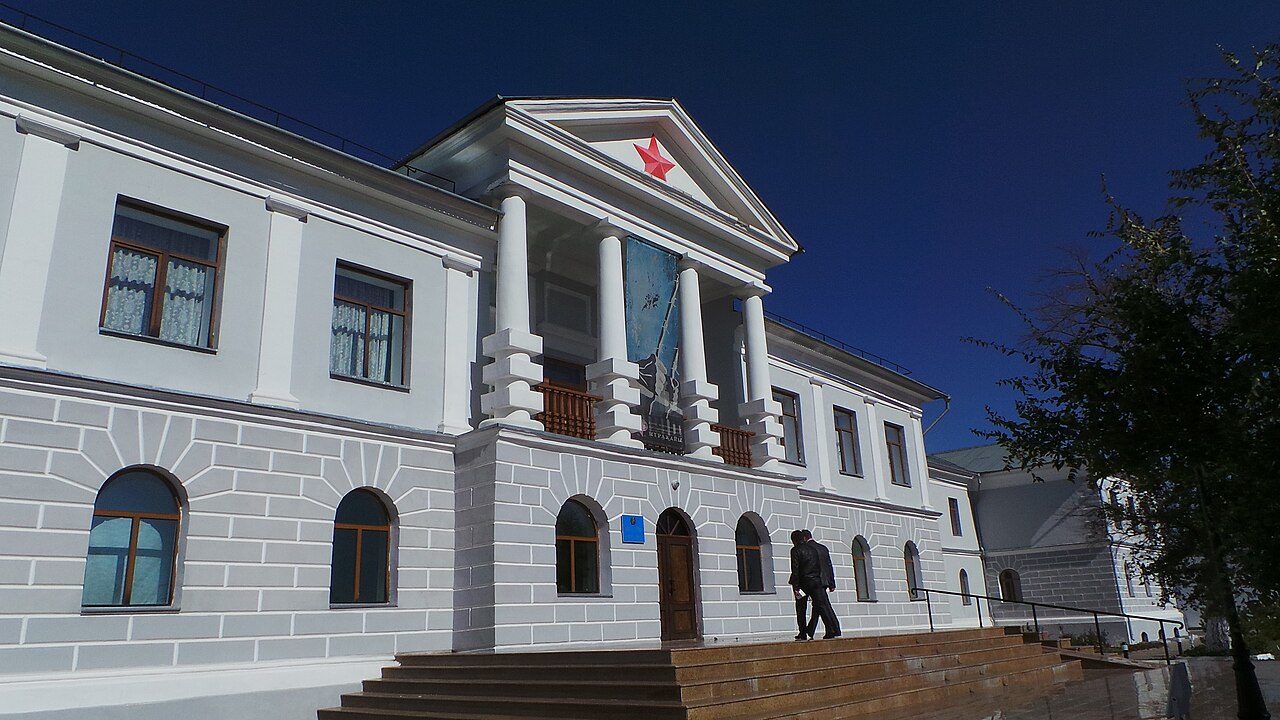
Museum of Memory of Victims of Political Repression (Karlag Museum)
Museum in the former Karlag headquarters at Dolinka, on the Soviet labour camp system.
Dolinka, about forty kilometres south-west of Karaganda, was the administrative centre of Karlag, one of the largest camp complexes of the Soviet Gulag, which operated from 1931 to 1959 and held prisoners from across the union. The museum occupies the former camp administration building, put up in 1935 by prisoner labour in a heavy Stalinist neoclassical manner and now listed as a monument of the Karaganda region. It opened as a museum of memory in 2011.
Displays run through the building's own rooms and cellars, covering collectivisation and the famine of the early 1930s, the arrival of deported nationalities, the women's camp at Akmol, forced labour in mines and farms, and the fate of scientists, writers and artists held here. Reconstructed interrogation rooms and cells sit alongside documents, photographs and personal belongings. The museum runs research projects on prisoners' biographies and receives visitors and delegations tracing family histories.
Highlights
- Housed in the 1935 Karlag administration building
- Reconstructed interrogation rooms and basement cells
- Documents and belongings of prisoners held in the camps
- Research projects tracing individual prisoners' biographies


