The Concertgebouw
Amsterdam's 1888 concert hall, known for the acoustics of its Main Hall and some 700 concerts a year.
The Concertgebouw opened in 1888 on what was then open land south of Amsterdam, built so that the city would have a hall worthy of a permanent orchestra. Its Main Hall seats about 2,000 people and is consistently ranked among the finest-sounding rooms anywhere, with the names of composers inscribed around the walls. A smaller oval Recital Hall serves chamber music and song, while the Choir Hall is used for family concerts and educational work.
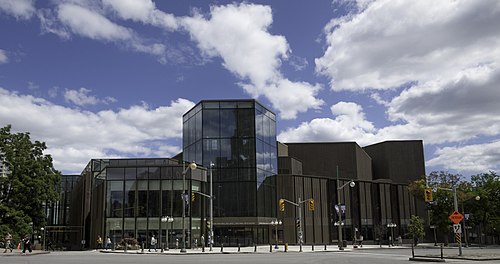
Adolf Leonard van Gendt designed the building in a neoclassical manner, with a colonnaded front and a pediment carrying a lyre. Because the site is marshy, the structure rests on roughly 2,200 timber piles; these were replaced with concrete foundations during a thorough renovation in the 1980s. The same project added a glass wing by Pi de Bruijn along one side, giving the hall a new entrance and foyer. More than 700 concerts are staged here each year.
Highlights
- Main Hall of about 2,000 seats, celebrated for its acoustics
- Home stage of the Royal Concertgebouw Orchestra
- Oval Recital Hall used for chamber music and song
- Free lunchtime concerts on Wednesdays