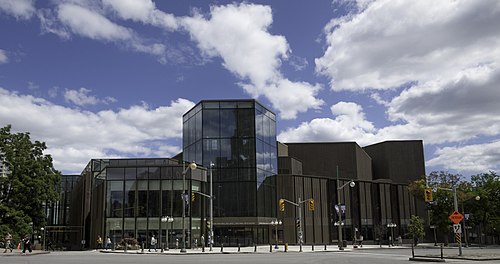
Concertgebouw Bruges
Bruges concert hall of 2002 by Robbrecht en Daem, with classical, contemporary music and dance.
The Concertgebouw was built for Bruges' year as European Capital of Culture in 2002 and is the city's main auditorium for classical, early and contemporary music, as well as dance and music theatre. Designed by the Ghent practice Robbrecht en Daem, it is a tall rectangular block clad in some 68,000 terracotta tiles whose colour recalls the red roof tiles of the historic centre. The main concert hall seats around 1,290 people in a vertical arrangement, while a smaller chamber music hall sits in the adjoining tower.
The building stands on 't Zand, a large square at the western edge of the medieval core, and its scale and modern idiom made it a much-discussed addition to a UNESCO-listed city. Alongside its concert programme, the Concertgebouw houses a collection of contemporary art and sound installations placed through its stairwells and corridors, which visitors can explore on the self-guided Concertgebouw Circuit. The venue also hosts the Bruges early music festival MAfestival and collaborates with visiting orchestras and ensembles.
Highlights
- Terracotta-clad concert hall completed for Bruges' 2002 Capital of Culture year
- Main auditorium of about 1,290 seats with a vertical chamber music hall
- Sound art and contemporary works installed throughout the building
- Self-guided Concertgebouw Circuit tour of backstage and roof-level spaces